Posted on August 3, 2012 in Office News by Office Staff Comments Off

Matthew J. Fineman, DPM
04/2/1940-07/17/2012

It is with great sorrow that we share the news that Dr. Matthew Fineman passed away Tuesday, July 17th., 2012, after a long and courageous battle with pancreatic cancer.

Dr. Fineman founded the “Foot & Ankle Centers of Charlotte County” in 1976. He was our mentor, friend and had many jokes to share. He will be greatly missed by all who knew him. It is our greatest pleasure to have known and loved him.

Posted on December 9, 2011 in Office News by Office Staff Comments Off

Posted on August 4, 2011 in Office News by Office Staff Comments Off

Our office recently celebrated Melody Kinnison’s 30th Anniversary working for Foot & Ankle Centers of Charlotte County. Melody began her employment in 1981 when the office had only two physicians. In the early days, she worked as the receptionist and as she gained more knowledge she advanced to become our Office Manager. She has been instrumental in the growth of our practice and wears many “hats” in the course of her day.

Picture of  Dr. Vakil, Dr. Humpel, Dr. Fineman, Melody Kinnison, Dr. Williams, and Dr. Yaege.

Dr. Fineman & Melody were presented with awards for their years of service.

As our gift to her, we took her, her husband Mike, and her “staff” on a weekend cruise to the Bahamas. We left from Miami and on our first evening enjoyed a cocktail party at which time awards were presented to the staff. On our second day, we visited Royal Caribbean’s private island and enjoyed the water sports. On the third day, we were in the Bahamas for our excursion to swim with the sting rays.

Picture of Jeanne Bennett, Lorraine Benedict, Chris Binder, and Karen Mangas.

Jeanne Bennett, Lorraine Benedict, Chris Binder, and Karen Mangas were presented with service pins for their years of service.

The trip was quite successful and enjoyed by all! Congratulations Melody!

Posted on August 4, 2011 in Foot & Ankle Care Tips by Office Staff Comments Off

Taking care of your feet is an important part of overall health for seniors. Healthy feet allow you to maintain balance, prevent falls and remain mobile. Feet can show early signs of health issues such as poor circulation, diabetes and some neurological conditions.

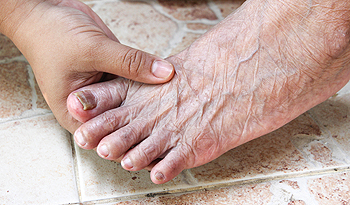
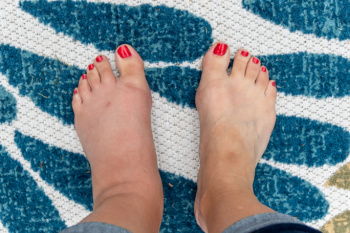
Picture of feet.Are you experiencing any of the following:

  • • Do you have decreased sensation, redness, swelling, cuts, blisters, ulcers or toenail problems?
  • • Are you experiencing difficulty in ambulation due to foot problems?
  • • Do you have low vision often needing a magnifying device to visualize your feet?
  • • Do you have any open sores on your feet or legs?
  • • Is walking making it difficult for you to complete your day to day activities (i.e., cooking, cleaning, bathing, laundry?)

If you answered “yes” to any of the above questions, contact our office for an evaluation.

Posted on June 7, 2011 in Office News by Office Staff Comments Off

Dr. Samir S. Vakil was selected as Vice-President of the Florida Podiatry Medical Association. He is scheduled to be installed as FPMA president in 2012. He was recognized at the 2011 Science & Management (SAM) Symposium held in January in Orlando, FL.

Posted on April 6, 2011 in Foot & Ankle Care Tips by Office Staff Comments Off

April is Foot Health Awareness Month and APMA’s Spring 2011 campaign integrates the APMA “Today’s Podiatrist” campaign with the First Lady’s “Let’s Move!” initiative. “Let’s Move!” was launched by First Lady Michelle Obama to emphasize and help solve the problem of childhood obesity nationwide. This April’s APMA campaign, Today’s Podiatrist Keeps America Moving (TPKAM), shines a spotlight on the connection between childhood obesity and foot health.

Posted on March 23, 2011 in Foot & Ankle Care Tips by Office Staff Comments Off

By Paula Spencer, Caring.com – Thu, Feb 03, 2011

Want to make a simple, ten-second check on the state of your health? Sneak a peek at your feet.

“You can detect everything from diabetes to nutritional deficiencies just by examining the feet,” says Jane Andersen, DPM, president of the American Association of Women Podiatrists and a spokeswoman for the American Podiatric Medical Association.

The lowly left and right provide plenty of insightful data: Together they contain a quarter of the body’s bones, and each foot also has 33 joints; 100 tendons, muscles, and ligaments; and countless nerves and blood vessels that link all the way to the heart, spine, and brain.

Unresolved foot problems can have unexpected consequences. Untreated pain often leads a person to move less and gain weight, for example, or to shift balance in unnatural ways, increasing the chance of falling and breaking a bone.

So when the feet send one of these 18 warning messages, they mean business.

1. Red flag: Toenails with slightly sunken, spoon-shaped indentations

What it means: Anemia (iron deficiency) often shows up as an unnatural, concave or spoonlike shape to the toes’ nail beds, especially in moderate-to-severe cases. It’s caused by not having enough hemoglobin, an iron-rich protein in the blood cells that transports oxygen. Internal bleeding (such as an ulcer) or heavy menstrual periods can trigger anemia.

More clues: On fingers as well as toes, the skin and nail beds both appear pale. The nails may also be brittle, and feet may feel cold. Fatigue is the number-one sign of anemia, as are shortness of breath, dizziness when standing, and headache.

What to do:A complete blood count is usually used to diagnose anemia. A physical exam may pinpoint a cause. First-step treatments include iron supplements and dietary changes to add iron and vitamin C (which speeds iron absorption).

2. Red flag: Hairless feet or toes

What it means: Poor circulation, usually caused by vascular disease, can make hair disappear from the feet. When the heart loses the ability to pump enough blood to the extremities because of arteriosclerosis (commonly known as hardening of the arteries), the body has to prioritize its use. Hairy toes are, well, low on the totem pole.

More clues: The reduced blood supply also makes it hard to feel a pulse in the feet. (Check the top of the foot or the inside of the ankle.) When you stand, your feet may be bright red or dusky; when elevated, they immediately pale. The skin is shiny. People with poor circulation tend to already know they have a cardiovascular condition (such as heart disease or a carotid artery) yet may not realize they have circulation trouble.

What to do: Treating the underlying vascular issues can improve circulation. Toe hair seldom returns, but nobody complains much.

3. Red flag: Frequent foot cramping (charley horses)

What it means: The sudden stab of a foot cramp — basically, the hard contraction of a muscle — can be triggered by fleeting circumstances such as exercise or dehydration. But if it happens often, your diet may lack sufficient calcium, potassium, or magnesium. Pregnant women in the third trimester are especially vulnerable thanks to increased blood volume and reduced circulation to the feet.

More clues: Charley horses tend to rear up out of nowhere, often while you’re just lying there. They can be a single sharp muscle spasm or come in waves. Either way, soreness can linger long afterward.

What to do: Try to flex the foot and massage the painful area. You may also be able to relax the muscle by applying a cold pack or rubbing alcohol. To prevent cramps, stretch your feet before you go to bed. Then drink a glass of warm milk (for the calcium).

4. Red flag: A sore that won’t heal on the bottom of the foot

What it means: This is a major clue to diabetes. Elevated blood glucose levels lead to nerve damage in the feet — which means that minor scrapes, cuts, or irritations caused by pressure or friction often go unnoticed, especially by someone who’s unaware he has the disease. Untreated, these ulcers can lead to infection, even amputation.

More clues: Oozing, foul-smelling cuts are especially suspect because they’ve probably been there awhile. Other symptoms of diabetes include persistent thirst, frequent urination, increased fatigue, blurry vision, extreme hunger, and weight loss.

What to do: Get the ulcer treated immediately and see a doctor for a diabetes evaluation. Diabetics need to inspect their feet daily (older people or the obese should have someone do this for them) and see a healthcare professional every three months.

5. Red flag: Cold feet

What it means: Women, especially, report cold feet (or more precisely, their bedmates complain about them). It may be nothing — or it may indicate a thyroid issue. Women over 40 who have cold feet often have an underfunctioning thyroid, the gland that regulates temperature and metabolism. Poor circulation (in either gender) is another possible cause.

More clues: Hypothyroidism’s symptoms are pretty subtle and appear in many disorders (fatigue, depression, weight gain, dry skin).

What to do: Insulating layers of natural materials work best for warmth. (Think wool socks and lined boots). If you also have other nagging health complaints, mention the cold feet to your doctor. Unfortunately, however, aside from treatment with medication in the event of a thyroid condition, this tends to be a symptom that’s neither easily nor sexily resolved.

6. Red flag: Thick, yellow, downright ugly toenails

What it means: A fungal infection is running rampant below the surface of the nail. Onychomycosis can persist painlessly for years. By the time it’s visibly unattractive, the infection is advanced and can spread to all toenails and even fingernails.

More clues: The nails may also smell bad and turn dark. People most vulnerable: those with diabetes, circulatory trouble, or immune-deficiency disorders (like rheumatoid arthritis). If an older person has trouble walking, sometimes the problem can be traced to the simple fact that as infected nails grow thicker, they’re harder to cut and simply go ignored to the point of pain.

What to do: See a foot specialist or your regular physician for care and treatment. In serious cases, over-the-counter antifungals are usually not as effective as a combination of topical and oral medications and the professional removal of diseased bits. Newer-generation oral antifungal medications tend to have fewer side effects than older ones.

7. Red flag: A suddenly enlarged, scary-looking big toe

What it means: Probably gout. Yes, that old-fashioned-sounding disease is still very much around — and you don’t have to be over 65 to get it. Gout is a form of arthritis (also called “gouty arthritis”) that’s usually caused by too much uric acid, a natural substance. The built-up uric acid forms needlelike crystals, especially at low body temperatures. And the coolest part of the body, farthest from the heart, happens to be the big toe.

“Three-fourths of the time, you wake up with a red-hot swollen toe joint as the first presentation of gout,” says podiatrist Andersen.

More clues: Swelling and shiny red or purplish skin — along with a sensation of heat and pain — can also occur in the instep, the Achilles tendon, the knees, and the elbows. Anyone can develop gout, though men in their 40s and 50s are especially prone. Women with gout tend to be postmenopausal.

What to do: See a doctor about controlling the causes of gout through diet or medication. A foot specialist can help relieve pain and preserve function.

8. Red flag: Numbness in both feet

What it means: Being unable to “feel” your feet or having a heavy pins-and-needles sensation is a hallmark of peripheral neuropathy, or damage to the peripheral nervous system. That’s the body’s way of transmitting information from the brain and spinal cord to the entire rest of the body. Peripheral neuropathy has many causes, but the top two are diabetes and alcohol abuse (current or past). Chemotherapy is another common cause.

More clues: The tingling or burning can also appear in hands and may gradually spread up to arms and legs. The reduced sensation may make it feel like you’re constantly wearing heavy socks or gloves.

What to do: See a physician to try to pinpoint the cause (especially if alcohol addiction doesn’t apply). There’s no cure for peripheral neuropathy, but medications from pain relievers to antidepressants can treat symptoms.

9. Red flag: Sore toe joints

What it means: Rheumatoid arthritis (RA), a degenerative joint disease, is often first felt in the smaller joints, such as the toes and the knuckles of the hands.

More clues: Swelling and stiffness usually accompany the aches. This pain tends to be symmetrical; for example, it happens simultaneously in both big toes or in both index fingers. RA develops more suddenly than degenerative arthritis, and attacks may come and go. Women are almost four times more affected than men.

What to do: A full workup is always needed to pinpoint the cause of any joint pain. For RA, there are many medications and therapies that can minimize pain and preserve function, though early diagnosis is important to avoid permanent deformity. (In the feet, the toes can drift to the side.)

10. Red flag: Pitted toenails

What it means: In up to half of all people with psoriasis, the skin disease also shows up in the nail as many little holes, which can be deep or shallow. More than three-fourths of those with psoriatic arthritis, a related disorder that affects the joints as well as the skin, also have pocked, pitted nails.

More clues: The nails (fingers as well as toes) will also thicken. They may be yellow-brown or have salmon-colored patches. The knuckle nearest the nail is also likely to be dry, red, and inflamed.

What to do: A variety of medications can treat both psoriasis and psoriatic arthritis and can restore the nail bed surface in many cases, especially if treatment begins early.

11. Red flag: Being unable to raise the foot upward from the heel

What it means: “Foot drop” (also “drop foot”) signals nerve or muscle damage that can originate well north of your feet — as far as your back or even shoulder or neck. Certain chemotherapy drugs can also cause trouble lifting the front part of the foot while walking or standing.

More clues: There may be pain and numbness as well, though not necessarily. Sometimes the pain is felt in the upper leg or lower spine, where a nerve is pinched (by damage or a tumor). In some cases, the foot drags when the person walks. It’s rare for both feet to be affected.

What to do: Report this serious symptom to your doctor. Foot drop can be completely reversible or permanent, depending on its cause and treatment.

12. Red flag: Dry, flaky skin

What it means: Even if your face or hands tend to be powdery-dry, don’t dismiss this skin condition on your feet. You don’t have to be a jock to contract athlete’s foot, a fungal infection that usually starts as dry, itchy skin that then progresses to inflammation and blisters. When blisters break, the infection spreads.

(The name comes from the moist places the fungus thrives — places athletes tend to congregate, such as locker rooms and pools.)

More clues: Athlete’s foot usually shows up between the toes first. It can spread to the soles and even to other parts of the body (like the underarms or groin), usually due to scratching.

What to do: Mild cases can be self-treated by bathing the feet often and drying them thoroughly. Then keep the feet dry, including using foot powder in shoes and socks. If there’s no improvement in two weeks or the infection worsens, a doctor can prescribe topical or oral antifungal medication.

13. Red flag: Toes that turn patriotic colors

What it means: In cold weather, Raynaud’s disease (or Raynaud’s phenomenon) causes the extremities to first go white, then turn blue, and finally appear red before returning to a natural hue. For reasons not well understood, the blood vessels in these areas vasospasm, or overreact, causing the tricolor show.

More clues: Other commonly affected areas include the fingers, nose, lips, and ear lobes. They also feel cool to the touch and go numb. Women and those who live in colder climates get Raynaud’s more often. It typically shows up before age 25 or after 40. Stress can trigger Raynaud’s attacks, too.

What to do: See a doctor about medications that can widen blood vessels, which reduces the severity of attacks.

14. Red flag: Feet that are really painful to walk on

What it means: Undiagnosed stress fractures are a common cause of foot pain. The discomfort can be felt along the sides of the feet, in the soles, or “all over.” These fractures — they often occur repeatedly — may be caused by another underlying problem, often osteopenia (a decrease in optimum bone density, especially in women over age 50) or some kind of malnutrition, including a vitamin D deficiency, a problem absorbing calcium, or anorexia.

More clues: Often you can still walk on the broken bones; it just hurts like heck. (Some hardy people have gone undiagnosed for as long as a year.)

What to do: See a foot doctor about any pain. If, for example, you’ve been walking around Europe for three weeks in bad shoes, your feet may simply be sore. But a 55-year-old sedentary woman with painful feet may need a bone-density exam. An X-ray can also reveal possible nutritional issues that warrant a referral to a primary care provider.

15. Red flag: Toes that bump upward at the tips

What it means: When the very tips of the toes swell to the point where they lose their usual angle and appear to bump upward at the ends, it’s called “digital clubbing” or “Hippocratic clubbing” after Hippocrates, who described the phenomenon 2,000 years ago. It’s a common sign of serious pulmonary (lung) disease, including pulmonary fibrosis and lung cancer. Heart disease and certain gastrointestinal diseases, such as Crohn’s disease, are also associated with clubbing.

More clues: Fingers can be clubbed as well as toes. It can happen in just some digits, or in all.

What to do: Treatment depends on the underlying cause, so report this serious symptom to a doctor. (Physicians are also well trained to look for clubbed digits during exams.)

16. Red flag: Shooting pain in the heel

What it means: Plantar fasciitis — a fancy name for inflammation of a band of connective tissue (fascia) running along the bottom (plantar) of the foot — is abnormal straining of the tissue beyond its normal extension.

More clues: The pain starts when you take your first steps in the morning and often intensifies as the day wears on. It’s usually concentrated in the heel (one or both) but can also be felt in the arch or in the back of the foot. Running and jumping a lot can cause it, but so can insufficient support. You’re at risk if you go barefoot a lot or wear old shoes or flimsy flip-flops, have gained weight, or walk a lot on hard surfaces.

What to do: If pain persists more than a few weeks or seems to worsen, have it evaluated by a podiatrist. Stick to low shoes with a strong supportive arch until you get further advice and treatment (which may include anti-inflammatory drugs and shoe inserts).

17. Red flag: “Phee-uuuuw!”

What it means: Though smelly feet (hyperhidrosis) tend to cause more alarm than most foot symptoms, odor — even downright stinkiness — is seldom a sign something’s physically amiss. (Whew!) Feet contain more sweat glands than any other body part — half a million between the two of them! And some people are more prone to sweat than others. Add in the casings of shoes and socks, and the normal bacteria that thrive in the body have a feast on the resulting moisture, creating the smell that makes wives and mothers weep. (Both sexes can have smelly feet, but men tend to sweat more.)

More clues: In this case, the one olfactory clue is plenty.

What to do: Wash with antibacterial soap and dry feet well. Rub cornstarch or antiperspirant onto soles. Toss used socks in the wash; always put on a fresh pair instead of reusing. Stick to natural materials (cotton socks, leather shoes) — they wick away moisture better than man-made materials. Open up laced shoes after you remove them so they get a chance to fully air out; don’t wear them again until they’re fully dry.

18. Red flag: Old shoes

What it means: Danger! You’re a walking health bomb if your everyday shoes are more than a couple of years old or if walking or running shoes have more than 350 to 500 miles on them. Old shoes lack the support feet need — and footgear wears out faster than most people think, foot specialists say.

More clues:Blisters (too tight), bunions (too narrow), heel pain (not enough support) — if you’re having any kind of foot trouble, there’s at least a 50-50 chance your shoddy or ill-fitting footwear is to blame.

Older people are especially vulnerable because they fall into the habit of wearing familiar old shoes that may lack support, flexibility, or good traction.

What to do: Go shoe shopping.

Posted on February 9, 2011 in Office News by Office Staff Comments Off

We want to thank everyone who stopped by our booth on Saturday for making this event a great sucess for the Foot & Ankle Centers of Charlotte County.

We are looking forward to the 4th. Annual Pantyhose Free Zone Expo next year!

Posted on November 29, 2010 in Office News by Office Staff Comments Off

Dr. Arlo Yaege attended the 8th Annual Diabetes Health Fair on Saturday, November 13, 2010. He performed foot screenings for the attendees and Lorraine Benedict, one of our assistants, showed attendees a selection of shoes that our office has available. We raffled off a pair of diabetic shoes with 3 pairs of inserts and 2 sets of tickets for two Charlotte Players Productions.

Our office even won the vendor raffle and took home the prize of a Pistachio cake with fresh fruit and whipped topping to enjoy!

Dr. Yeage performing  foot screening at 8th Annual Diabetes Health Fair. Dr. Yeage perfoming foot screening near our orthotics display.
Foot & Ankle Centers of Charlotte County at the 8th Annual Diabetes Health Fair Dr. Yeage with one of our raffle winners.
Posted on October 26, 2010 in Foot & Ankle Care Tips by Office Staff Comments Off

Now that the fall season is here, students are reluctantly trading in their sunblock and swimsuits for books and backpacks. Now is the time for parents to outfit their children for back-to-school, and new shoes are at the top of everyone’s list. The American Podiatric Medical Association (APMA) and your podiatric physician recommend that you follow these simple guidelines to make sure that your student is outfitted correctly and stylishly: Read More

Next Page »
352 Milus Street
Punta Gorda, FL 33950
(941) 639-0025
3406 Tamiami Trail
Suite 1
Port Charlotte, FL 33952
(941) 627-5161
© All Rights Reserved 2010-2013
Foot and Ankle Centers of Charlotte County
Podiatrists in Punta Gorda, Florida | Podiatrists in Port Charlotte, Florida
Podiatry Website Design & Podiatrist Marketing by PodiatristSites.com